


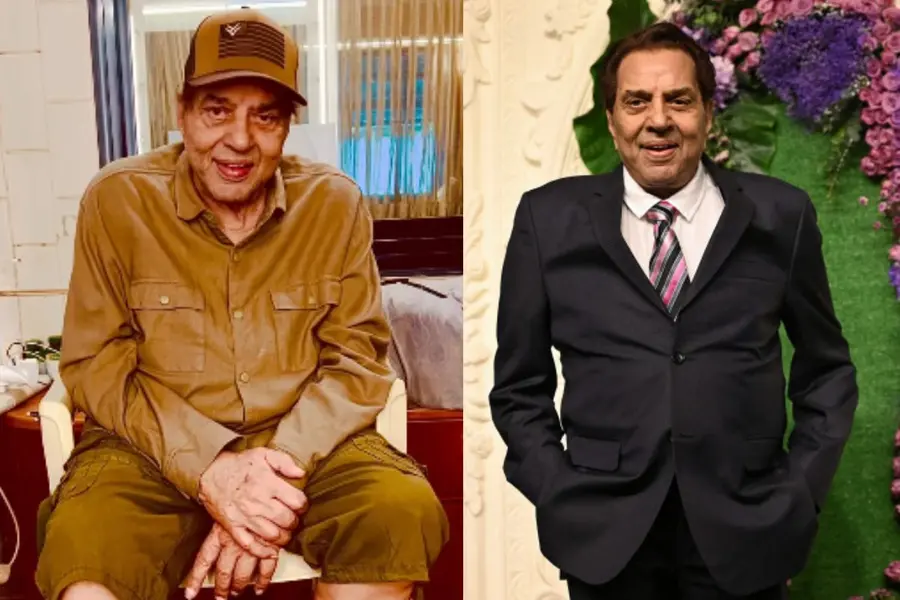
Dharmendra Deol’s journey from a small Punjabi village to Bollywood royalty reads like a fairy tale. Born in 1935 in Sahnewal, Punjab, he arrived in Bombay after winning a Filmfare talent hunt, debuting in 1960’s Dil Bhi Tera Hum Bhi Tere. His breakthrough came with Phool Aur Patthar (1966), which turned him into an overnight sensation. Over six decades, he has appeared in well over 300 Hindi films – a record of hit after hit – becoming the very He-Man of Bollywood. Even in 2025, at 89, fans cherished him for his strength, charm and humility.
From Punjab Fields to Bombay Dreams
Dharmendra’s story is pure Bollywood fairytale. He was born Dharmendra Singh Deol on December 8, 1935 in Sahnewal, Punjab, the son of a village school’s headmaster. As a child he’d daydream about movies and secretly polish his charming looks and smile. After finishing school, he won a nationwide talent contest organized by Filmfare magazine – a ticket he prayed would lead to Mumbai. True enough, by 1960 he had moved to Bombay and made his debut in Dil Bhi Tera Hum Bhi Tere. The film didn’t set the box office on fire, but it launched his journey. Soon the friendly farm boy’s rugged good looks and easy smile caught audience attention. Hits like Shola Aur Shabnam (1961) and Bandini (1963) gave him early recognition, and by the mid-60s, Dharmendra was well on his way to stardom. With each film, he added a little more masala of heroism, romance and action, truly becoming Hindi cinema’s quintessential leading man.
Iconic Films and Unforgettable Roles
Over the decades, Dharmendra starred in so many classics that his filmography reads like a golden history of Bollywood. Some of the most memorable include:
-
Phool Aur Patthar (1966) – Dharmendra’s breakthrough. Playing a tough but kind-hearted ruffian opposite Meena Kumari, he stunned audiences with his raw magnetism. The film was a mega-blockbuster and earned him his first Filmfare Best Actor nomination.
-
Anupama (1966) – In this heartfelt drama he was an introspective writer who won a reclusive woman’s heart with gentle warmth. Critics praised his sensitive acting, showing there was real depth behind his brooding good looks.
-
Satyakam (1969) – As a principled schoolteacher standing up to corruption, Dharmendra delivered one of his finest performances. His idealistic hero in this classic is still remembered as a symbol of integrity and courage.
-
Mera Gaon Mera Desh (1971) – The archetypal Punjabi hero rides in here – with blazing guns and a twinkle in his eye. This rural action film solidified his image as a brave, noble man of the people.
-
Seeta Aur Geeta (1972) – Romancing the great Hema Malini, he charmed moviegoers in this fun twin-swap comedy. His smooth chemistry and comic timing with Hema in dual roles kept audiences laughing and sighing.
-
Sholay (1975) – Even mentioning “Sholay” is enough to summon excitement. Playing the lovable outlaw Veeru alongside Amitabh Bachchan’s Jai, Dharmendra perfectly balanced swagger and sweetness. Veeru’s cowboy hats, whip-cracking heroics and heartfelt love for his doomed friend turned into iconic Bollywood memories (who can forget “Yeh haath humko de de, Thakur!”?).
-
Chupke Chupke (1975) – A classic Hrishikesh Mukherjee comedy where Dharmendra plays a playful brother-in-law in disguise. His comic flair and chemistry with co-stars like Amitabh and Jaya Bachchan show that our tough hero also had a cheeky, humorous side.
-
Dream Girl (1977) – Back with Hema Malini in uniform, Dharmendra charmed once more in this romantic comedy. The on-screen “Dream Girl” duo’s dances and banter are evergreen.
-
The Burning Train (1980) – Taking on an ensemble cast with several stars, he still stood out as a heroic everyman. His role as a brave passenger trying to stop a runaway train disaster highlights why he was loved as an action hero who always stood up for others.
Beyond these big hits, he showed off his range: in Haqeeqat (1964) he was a patriotic soldier; in Chupke Chupke the goofy poser; in Rocky Aur Rani Kii Prem Kahaani (2023) he even popped up decades later as a jovial grandfather – reminding new generations why he remains so endearing. Each film etched a new facet of his legend: the romantic, the rebel, the comic, the caring friend.
A Poet at Heart: Love and Charm
Off-screen, Dharmendra’s biggest role has been as a romantic hero in real life too. His love story with actress Hema Malini is Bollywood lore. By the early 1970s, their on-screen chemistry was dazzling (see Seeta Aur Geeta, Sholay, Dream Girl). Eventually Dharmendra confessed that Hema had captured his heart. In 1980 he made headlines by marrying Hema, even though he was already happily wed to his first wife, Prakash Kaur. (“I didn’t hurt anyone intentionally – I just followed my heart,” he said years later.) Through all the gossip, Dharmendra stood by Hema like a rock. Even today, at 89, he calls her “meri Hema” and writes Urdu poetry just for her. Their daughters Esha and Ahana say he still surprises their mother with the little romantic gestures – remembering her favourite songs, jamming out to old Hindi film tunes on cassette tapes, and whispering sweet couplets in Urdu. As Hema wrote of him, he is “a man of immense strength and softness – a rare combination.” Indeed, behind the macho image lies a gentle dreamer: an actor who once joked “I’m but a simple actor,” showing his trademark humility even while living a real-life fairy-tale romance.
And his first marriage to Prakash Kaur deserves mention too. Married at 19 in 1954, they had four children together: legendary actor sons Sunny and Bobby Deol (who inherited their father’s intensity on screen), and two daughters (Vijeta and Ajeeta) who grew up mostly out of the limelight. Prakash Kaur always stayed quietly behind the scenes, and Dharmendra often credits her with raising their children with old-fashioned values. These two marriages (and a wide, blended family) are part of what makes him relatable – even as a superstar, he has been a committed husband and a proud “Dharam-Papa” at home.
Iconic Films and Famous Roles
Dharmendra’s filmography is studded with classics. Some of his most beloved movies include:
-
Phool Aur Patthar (1966) – The film that made him a superstar. His portrayal of a local tough guy with a soft heart (literally “Flower and Stone”) showcased both his action chops and his romantic allure.
-
Anupama (1966) – A sensitive drama in which he plays a struggling writer who wins over the title character with patience and kindness. Critics applauded how he held his own opposite lead actress Sharmila Tagore, proving his dramatic mettle.
-
Satyakam (1969) – As an idealistic teacher, Dharmendra turned in a performance that still touches hearts. The film’s message about truth and integrity, and his soulful acting, remain benchmarks of Hindi cinema.
-
Mera Gaon Mera Desh (1971) – This action drama cemented his action-hero image. Dharmendra rides into the desert on horseback with guns blazing, rescuing villagers from bandits – pure hero material.
-
Sholay (1975) – No list of Dharmendra films is complete without Sholay. His Veeru – the cheeky cowboy who loves to dance, get into scrapes and care deeply for friends – is iconic. Every pose, every punchline, and his chemistry with Jai (Amitabh Bachchan) is now part of cinema legend.
-
Chupke Chupke (1975) – A complete contrast, here he plays a witty lecturer pulled into a hilarious family prank. He demonstrates perfect comic timing opposite Amitabh and Jaya Bachchan, proving he could deliver laughs as easily as he delivered punches.
-
Dream Girl (1977) – Reuniting with Hema Malini, Dharmendra charmed audiences in this romantic comedy. Their playful flirtation (complete with clever song-and-dance numbers) reminded everyone why they were Bollywood’s dream couple.
-
Burning Train (1980) – In this all-star disaster flick, Dharmendra stands out as the brave civilian rushing to stop a blazing train. Even amid explosions and star-studded casts, his earnest performance anchors the story, showing that his bravery on film remained believable even off-screen.
Each of these films has a special place in Bollywood history, and each helped to build Dharmendra’s image: the hero we could root for, laugh with, and fall in love with.
The People’s Hero: Humility and Simplicity
Despite the “He-Man” tag and his muscular roles, off-screen Dharmendra is refreshingly down-to-earth. He’s often called a people’s man – a gentle giant whose childlike innocence charms everyone he meets. In person he’s known to be absolutely approachable: he’ll gladly pose for selfies with fans, never turning away anyone who wants an autograph or a smile. Colleagues say he was always the most humble superstar on set, often sharing food or giving a pep talk to junior actors.
Dharmendra loves the simple life. He spends weekends at his farmhouse in Lonavala, wearing a kurta-pajama instead of a starched suit. At 89, he still enjoys driving his tractor and tending the fields, reminding everyone that he hasn’t forgotten his Punjab roots. He writes Urdu poetry and Shayari in his spare time – influenced by old legends like Dilip Kumar and Meena Kumari – and sometimes shares verses with fans on his social media. For example, during Diwali or Dussehra he’ll post a heartfelt video, wishing everyone long life, kindness and success (and often slipping in a spiritual thought about how being “neki kar” – doing good – leads to “tarakki” – progress in life).
This humility is genuine. He famously says, “Faqat ek adna-sa adakaar hoon” – “I am but a simple, ordinary actor.” He also reflects on fame philosophically, joking that glory can be fleeting (“shohrat ki balandi bhi ek pal ka tamasha hai,” a couplet he often quotes). He showers praise on those around him – as an emotional man, he once broke down recalling how Mohammad Rafi’s songs brought him fame. And he never forgets gratitude: people who encountered him—even in small ways—hear him say “Har us shakhs ka ahsaanmand hoon jisse mujhe zindagi mein ek martaba bhi mila.” (He’s thankful to everyone who helped him even once.)
In his own words, Dharmendra prizes the love of ordinary people above all awards. He once smiled on stage and said, “My biggest award is the smile of a common man.” That just might sum up the man – a superstar who still beams brighter hearing a fan’s laugh than seeing any medal around his neck.
Off-screen, Dharmendra is every bit as warm and welcoming as his on-screen characters. Whether at public events or on the street, he carries a genuine smile and childlike innocence. He freely poses for selfies and is known to chat in Urdu couplets or witty one-liners with fans. In interviews he stresses he’s “just an ordinary actor,” reflecting his famous humility. Even in his late 80s, he radiates the same charisma: you might spot him in a simple kurta on his farm in Lonavala, calmly drinking tea with workers or driving his tractor between shoots, encouraging everyone to stay humble and kind. This grounded, family-man image – far from any Hollywood-style diva – endears him even more to people of all ages.
Family, Love and Legacy
Dharmendra’s personal life has been as full and eventful as any of his movies. He and Prakash Kaur remain married to this day (they’ve never divorced), raising four children together. His sons Sunny Deol and Bobby Deol grew up to become popular action stars in their own right, with Sunny delivering blockbusters like Gadar and Border, and Bobby charming a new generation as a romantic hero in films like Barsaat. Dharmendra’s two daughters from this marriage, Vijeta and Ajeeta, chose quieter lives away from the cameras, living overseas.
From his marriage to Hema Malini, Dharmendra has two more daughters: Esha and Ahana. Esha followed in her mother’s footsteps and debuted in Bollywood in the early 2000s (films like Dhoom, Yuva), before stepping back to focus on family and other passions. Ahana, by contrast, prefers the backstage – she’s worked as an assistant director and shares her parents’ love of dance and culture. Together, the Deol family – from generations – is fondly seen as Bollywood royalty.
At home, Dharmendra combined Punjabi vigor with old-school discipline. Friends say he ran his household the traditional way: his children joked that he had a “fear factor” – not a scary kind, but one that made everyone straighten up when he walked in! He insisted on rules like no children sleeping with parents after a young age, and he sometimes forbade flashy parties, preferring simple family gatherings. (He once turned down a big birthday bash for Sunny, saying money is better spent helping others.) This firm parenting never meant a lack of affection. Sunny recalls that though his father was strict, he was also kind and very proud of his kids. That balance of toughness and tenderness – just like Hema said – defined Dharmendra the man: as comfortable telling jokes and stories on set as he was teaching his kids life’s lessons over dinner.
As he has said many times, Dharmendra’s deepest wish is simply to be remembered for loving his country and people. He served one term as a Member of Parliament (BJP, Bikaner, 2004–2009) to give back to society. And even in retirement from politics, he stays proud of being “Punjabi at heart” and Indian to the core. His children and grandchildren carry on the Deol name in film and beyond, but all of them know whose footsteps – and big shoe prints – they walk in.
Honors and Achievements
Dharmendra’s six-decade legacy comes with many honours – yet the true reward for him has always been audience love. In 2012 the Government of India awarded him the Padma Bhushan (see image below) in recognition of his contribution to cinema. He also won the Filmfare Lifetime Achievement Award in 1997, and countless other accolades from film festivals and industry groups over the years. In 1973 he even set a Bollywood record by starring in eight hit films in a single year – and again scored seven hits in 1987, showcasing his box-office charisma. In short, his filmography is studded with records and prestigious nods.
The Padma Bhushan, India’s third-highest civilian honour, was presented to Dharmendra by the President in 2012 – a proud moment capping decades of hard work. (Here he is smiling as President Pratibha Patil pins the medal on him.) He also briefly served as a Lok Sabha MP from Rajasthan (2004–2009), channeling his fame into public service.
Yet Dharmendra always stays grounded about these laurels. He often reminds interviewers that to him, “the real treasure is the simple joys.” His greatest pride has been the enduring legacy he built on screen. Even in his late eighties he was signing up for cameos – audiences cheered when he playfully appeared in 2023’s hit Rocky Aur Rani Kii Prem Kahaani, proving his charm is truly ageless. And fans eagerly awaited his next project (the war drama Ikkis slated for late 2025), excited that the legend continues to share his screen magic.
A Legend Who Loves Like a Poet
Today, Dharmendra lives the life of a legend – yet with the soul of a romantic poet. He delights in quietly celebrating festivals, growing flowers, reciting poetry and tending to his family. When asked how he’d like to be remembered, he gave a simple answer: “I love my country, my people – I just want to be remembered for that.” It’s a line as humble and heartfelt as the roles he chose.
For millions of fans, Dharmendra will forever be that bold hero with a wink in his eye, the shy romantic staring deep into his heroine’s heart. He taught us that heroism can be gentle, that strength and sensitivity can live side by side. Above all, he showed that true stardom comes from staying true to oneself – whether penning a love poem for one’s beloved or ploughing fields under the open sky. In every sense, he has loved like a poet and lived like a legend, and Bollywood – indeed the whole country – will always love him right back.


